Let’s start growing . . . (3rd Sunday of Lent Year C)

Webmaster • March 21, 2025

The first reading from Exodus takes place with Moses standing at the burning bush. It is when God reveals himself to Moses and declares that he will lead them out of slavery into their own land. We can imagine Moses’ puzzlement when God reveals his name as the cryptic “I am who I am.”


The phrase in Hebrew, which gets translated into “Yahweh,” is a mystery to translators. The thrust of it seems to be that God is who God is, not who humans say God is. Also, there is a sense that God is in the present, not the past or future, but always present. In the Gospel of John, Jesus declares several times “I AM,” using the exact same words that God used in speaking to Moses. All of his listeners understood then that he was equating himself with God.


In the Gospel, John the Baptist and Jesus both had a sense of urgency about them. They were serious about spreading their message quickly: “Repent! The Kingdom of God is near!” They seemed to understand there was no time to waste. There were hungry people to be fed, people in need of healing, people suffering discrimination be cause of their culture or religion, people trapped in sin, and people used as pawns in unjust economic and military systems. There wasn’t time to stand around and wait for God to swoop in and make everything right in the world. Jesus came ready to do God’s work in the world, and he was eager for others to begin doing it with him “right now!”


Was Jesus impatient like the owner of the fig tree? Does he want results now? Or was he like the gardener, ready to demonstrate more trust and patience and give people more time to bear fruit?


Maybe Jesus was both. He has little time for laziness or excuses. But he also knows that as humans we take time to grow and mature. The point seems to be that Jesus wants to see movement. We all have a gardener tending to us and advocating for us, but will we allow ourselves to fruit? We don’t have unlimited time. Let’s start growing.


Questions of the week

• What do you think Jesus feels most urgent about in the world today?

• How do you need to begin bearing fruit in your life now?
By Webmaster May 30, 2026
Last Monday 25th May, Pope Leo XIV’s first encyclical letter, Magnifica humanitas, was presented in the Vatican’s Synod Hall. Professor Anna Rowlands, a theologian and Professor at Durham University, was one of the speakers at the presentation. Following the launch event, Professor Rowlands reflected on this significant day and what it means for the Church and for the world: “The day has been pretty exciting, intense and momentous, as you would expect. This is the first time that a Pope has attended in the modern era, at least, the launch of a papal encyclical. Today there was a sense of a really important issue and set of topics being addressed, but also of a real gathering together with a spirit of appropriate celebration of a text that I think is a gift to the world.” Turning to the encyclical, Professor Rowlands noted that Pope Leo has been focused on AI as a central issue since the beginning of his papacy. She explained: “I think he genuinely feels that we’re living on the cusp of a new phase of the industrial revolution, and that we’ve entered a new moment where those same issues, in an intensified way, are now present to us again.” Describing the urgency with which Pope Leo is approaching the topic, she said: “[The Pope] thinks that this is an issue we should have been thinking about yesterday, and I think he worries, genuinely, that people don’t feel confident to tackle the AI conversation. He wants people to feel confident; their expertise doesn’t need to be in science or tech to engage with this issue. We do need the people with those bodies of expertise, but we are experts in humanity. We know what it is to inhabit a human body, to desire real human relationships rather than mere artificial connection with each other.”  The central focus of Magnifica humanitas is the dignity of the human person, and the need to ensure “the genuine flourishing of human beings.”
By Webmaster May 30, 2026
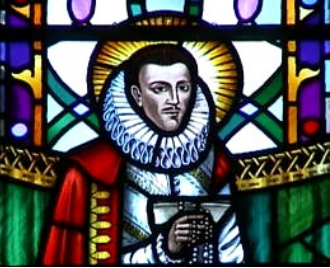
St Justin Martyr never ended his quest for religious truth even when he converted to Christianity after years of studying various forms of pagan philosophies. As a young man, he was principally attracted to the school of Plato. However, he found that the Christian religion answered the great questions about life and existence far better than the philosophers. Upon his conversion he continued to wear the philosopher’s mantle, and became the first Christian philosopher. He combined the Christian religion with the best elements in Greek philosophy. In his view, philosophy was a pedagogue of Christ, an educator that was to lead one to Christ.  St Justin Martyr is known as an apologist, one who defends in writing the Christian religion against the misunderstandings and many attacks of the pagans. Two of his so-called apologies have come down to us; they are addressed to the Roman emperor and to the Senate. For his staunch adherence to the Christian religion, Justin was beheaded in Rome in 165.
By Webmaster May 30, 2026
On this feast of the Most Holy Trinity, otherwise known as Trinity Sunday, each reading points to different aspects of God’s identity. The first reading recounts the glimpse of the creator God whom Moses encountered on Mount Sinai: a “merciful and gracious God, slow to anger and rich in kindness and fidelity.” Paul’s Letter to the Corinthians reminds us of the gifts that each person of the Trinity has to offer us: “the grace of the Lord Jesus Christ and the love of God and the fellowship of the Holy Spirit.” In the Gospel reading, John tells us of a God who loves us so much that he allowed his Son to leave his side and come into our world to experience human life. The Gospel passage begins with the famous verse referenced on placards in the crowds at popular sporting events: John 3:16. “For God so loved the world that he gave his only Son so that everyone who believes in him might not perish but might have eternal life.” Martin Luther, the force behind the Protestant Reformation, called this verse “the Gospel in miniature.” Note that John’s view of God’s love and desire for salvation extends to the entire world. God so loved all of humanity that he sent his only Son, not “God so loved the Jews,” or the “early Jewish-Christians,” or the “Christians” who came after the Resurrection. This was a new way of thinking for many believers in Jesus’ time who were locked into a mindset of an “in group” and an “out group.” Even today, many religious traditions can be very exclusive. If you are in the “out group” there isn’t much chance of working your way into the “in group” except through exacting work.  This passage suggests differently. God wants all people to be saved, and God will welcome all who live in the light (as John goes on to explain a few verses later). God didn’t send Jesus to condemn anyone, but some people choose against Jesus and God, thereby “condemning” themselves. God doesn’t act as a judge; individuals choose for themselves to accept or reject God. Questions of the week  What does verse 3:16 mean to you: “For God so loved the world...”?  Which way of thinking do you tend to lean toward - believing that God is our judge or that we choose our own eternal destiny by how we choose to live our lives?
By Webmaster May 30, 2026
CORPUS CHRISTI 7TH JUNE (NEXT WEEKEND) EXTENDED EXPOSITION - next weekend we will be celebrating our annual extended period of Exposition of the Blessed Sacrament in the Sacred Heart Church from after our Sunday morning 11.00 Mass and ending with Evening Prayer and Benediction at 15.30. At the rear of the church is a ‘sign-up’ sheet for parishioners to say that they will be present so that we know that the entire time period is covered; please sign-up TODAY! EXTRAORDINARY MINISTERS OF THE EUCHARIST - A reminder to all of our Extraordinary Ministers of the Eucharist that it is a requirement of the diocese that your commitment to your ministry within the Parish should be publicly renewed annually. This will be done at our Masses at 09.00 or 11.00 next Sunday (7 th June). Please do make a point to sign your name in the sacristy after the Mass you attend on Corpus Christi so that your renewal can be recorded and sent through to the diocese. Thank you.
By Webmaster May 30, 2026
There is a global debt crisis causing immense suffering for our brothers and sisters in low-income countries. Money that should be spent on healthcare and education is flowing out from countries that can least afford it. Complex factors have caused this crisis and now governments have an impossible choice between serving their people or paying their creditors. Often, they have paid their original debt back, but spiralling interest means they will never break the cycle. There are practical solutions are available. Please sign the petition at: www.cafod.org.uk/cancelthedebt
By Webmaster May 30, 2026
For administration purposes, it is necessary to cleanse the Euro Car Park database of Registered Parishioner Cars. The last time this was done was in 2021. In the next few weeks, the system will have an ‘auto-purge’ so that all vehicles that are currently registered but have not used in the car park for the last six months will be purged from the system (ceasing to be ignored by the cameras). If you are a Registered Parishioner and have a car that you wish to remain on the system, that you have not used in the last six months – please contact the Parish Office ( cobham@abdiocese.org.uk ) to have the vehicle re-registered. Thank you
By Webmaster May 29, 2026
The musings of one of God’s smallest creatures on events in and around the Parish over the past seven days . . . . A time of being all over the place for Fr D this week and two requiem Masses to celebrate as well . . . . . At our 11.00 Sunday morning Mass last weekend Fr D celebrated the ‘Rite of Welcome’ for a toddler who will be baptised in June. The ‘Rite of Welcome’ is the front part of the baptism ceremony that used to be celebrated at the church door when parents brought their child for baptism. The Rite enables the community in which the child will be baptised to acknowledge that they are preparing to join the community. On Bank Holiday Monday Fr D had lunch with two former parishioners from Reigate his (first parish as a Parish Priest), one of whom used to be his cleaner. Lunch took place at a local hostelry and many, many old times were called to mind. Tuesday morning Fr D celebrated the first of two requiems this week and following this he went to the Tilt Cemetery to celebrate the burial. By the time that he returned home afterwards he thought that he was melting and quickly changed out of ‘the black’ and into shorts and a t-shirt. It still took copious amounts of drinking cold water from the fridge before he felt anything approaching human again. Wednesday morning saw another blistering day weather-wise and another requiem for Fr D to celebrate. This time after the service Fr D went off to Randalls Park Crematoria with the family afterwards. Once again he was overheating by the time he returned and the shorts and another t-shirt appeared, along with several bottles of water from the fridge. On Thursday Fr D did not have a Mass to celebrate in the Sacred Heart owing to the annual Jubilarians celebration down at Arundel Cathedral. This was an opportunity for all the clergy of the diocese to celebrate with this year’s Jubilarians 60, 50, 40, and 25 years of ministry as a priest in the diocese. After the Mass there was a photocall for the Jubilarians in the Cathedral precincts before a nice lunch in the Cathedral Hall, just along the road. Because there was a reasonable breeze on the day Fr D took his time driving home what he called “the scenic route” - involving no motorway driving at all.  After Morning Prayer and Mass on Friday, Fr D had just a few bits to do for the newsletter this week before handing it over to Sarah in the Parish Office. In the evening he went out for a meal with two parishioners . . . .
By Webmaster May 26, 2026
A usual the Diocese asks all Extraordinary Ministers of the Eucharist to renew their commitment to their important ministry on the feast of Corpus Christi. At present we only receive the chalice at the 09.00 and 11.00 Masses on Sunday so the renewal will take place at these two Masses on Sunday 7th June (Corpus Christi). Ministers will be asked to come and stand at the front of the sanctuary by Fr Daryl when they are required, renew their commitment and then return to their places in the congregation (except for those who are ministering at the Mass that day). Immediately after Mass those who have renewed their commitment are asked to go to the sacristy and sign next to their name.
By Webmaster May 26, 2026
Grateful thanks to all those throughout the Deanery who helped to arrange and facilitate our shared time of Eucharistic Adoration. To prayer leaders, musicians, those who signed up, those who 'popped' in, and the clergy our appreciation.  The fruits of this time we leave with the Lord and who knows maybe it is something we can do again.... Fr Simon Hall
By Webmaster May 26, 2026
Philip was a contradiction, combining popularity with piety against the corrupt backdrop of Rome and a disinterested clergy. Philip abandoned the chance to become a businessman, moved to Rome from Florence, and devoted his life to God. After three years of philosophy and theology studies, he gave up any thought of ordination. The next 13 years were spent in a vocation unusual at the time - that of a layperson actively engaged in prayer and the apostolate. As the Council of Trent (1545- 63) was reforming the Church on a doctrinal level, Philip’s appealing personality won him friends at all levels of society, from beggars to cardinals. He rapidly gathered together a group of laypersons won over by his audacious spirituality. Initially, they met for informal prayer and discussion, and also served the poor in Rome. At the urging of his confessor, Philip was ordained a priest and became an outstanding confessor himself, gifted with the knack of piercing the pretences and illusions of others, though always in a charitable manner and often with a joke; arranging talks, discussions, and prayers for them in a room above the church. Some of Philip’s followers became priests and lived together in community. This was the beginning of the Oratory, the religious group he founded.  After spending a day hearing confessions and receiving visitors, Philip Neri suffered a haemorrhage and died on the feast of Corpus Christi in 1595. He was beatified in 1615 and canonized in 1622.